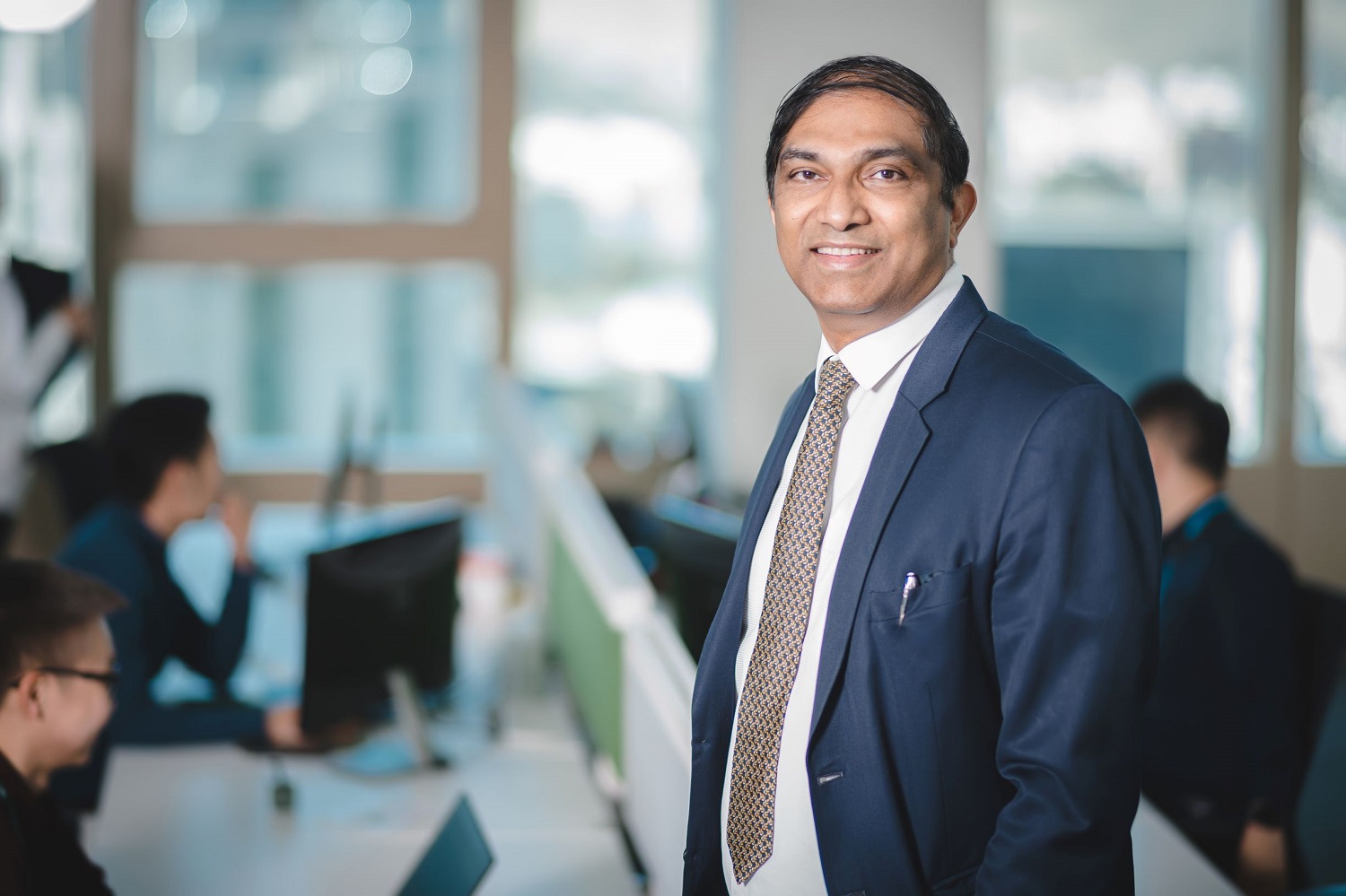
Sachin Nair, Deputy Chief Executive Officer of Khan Bank, on rebuilding the technology behind Mongolia’s largest bank, what artificial intelligence means for a country of vast distances and small numbers, and why the steppe may be a better laboratory for digital banking than any financial capital.
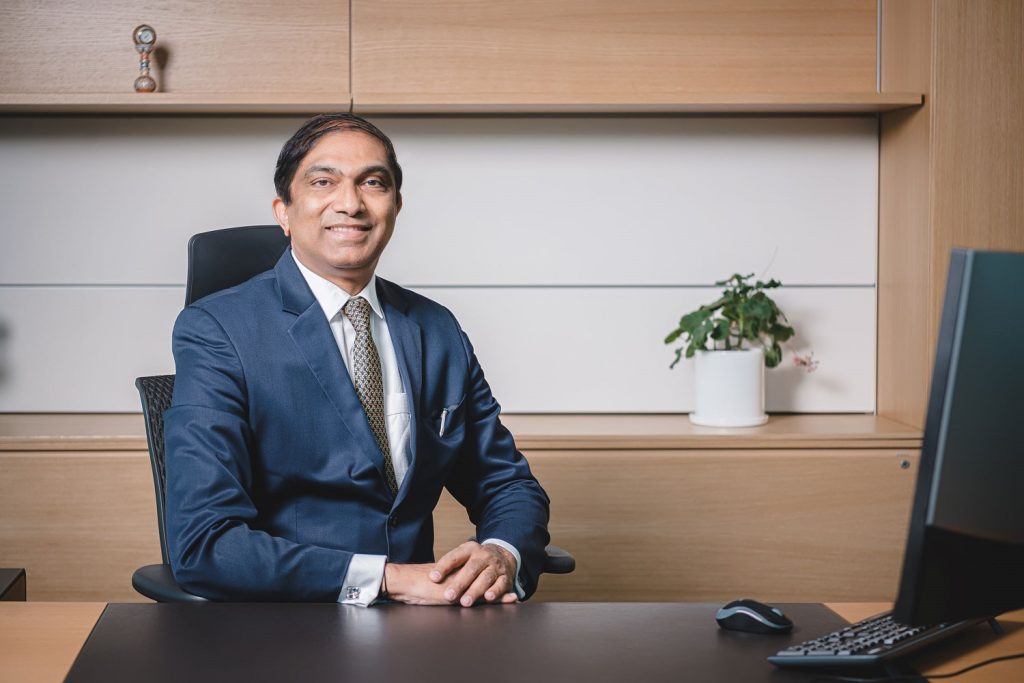
Khan Bank sits at the centre of Mongolian life in a way few banks anywhere can claim. It processes roughly seven in ten of the country’s daily banking transactions and serves around eighty per cent of Mongolian households, from Ulaanbaatar’s tower blocks to soum centres a day’s drive from the nearest paved road.
The man responsible for the technology behind all of it arrived in 2019, after a career that ran through JP Morgan, Japan and Hong Kong. Sachin Nair joined as Chief Information Officer, was named Deputy CEO in 2023, and has since overseen one of the most ambitious core banking modernization attempted by any bank in the region. He spoke to Mongolia Rising about that programme, about where AI genuinely earns its keep in banking, and about what a herder’s loan application can teach the industry about machine learning.
“In most countries AI in banking is a convenience. In Mongolia it is an inclusion tool.”
Sachin Nair joined Khan Bank as Chief Information Officer in August 2019 and was appointed Deputy Chief Executive Officer of Technology and Operations in May 2023. A technology professional with more thirty-year years’ experience, he previously held senior roles at JP Morgan Chase and Omnitech Services in Japan and Hong Kong, and built and ran Arges Global, a services organisation operating across eight countries. He was named a winner of the CIO 100 Award in 2022. Khan Bank, founded in 1991, is Mongolia’s largest bank, with around 3 million customers, some 540 branches and the country’s largest ATM & Kiosk machine network. It listed on the Mongolian Stock Exchange in April 2023 in one of the largest IPOs in the country’s history.
You spent your career in some of the most sophisticated banking markets in the world: JP Morgan, Japan, Hong Kong. Then in 2019 you moved to Ulaanbaatar. What did you see in Mongolia that others missed?
Scale, oddly enough. People hear that Mongolia has three and a half million citizens and assume the opportunity is small. What I saw was a bank that touches nearly every household in the country. When Khan Bank changes something, the whole nation feels it the next morning. In my previous roles I worked on systems that served one department of one bank in one market. Here, a single decision about mobile banking reaches a herder in Khovd, 1500 kilometers west of the capital and a fund manager in Ulaanbaatar in the same release. Very few technologists ever get to work at that level of national consequence. That is what brought me here, and it is what has kept me here.
Seven years on, has the country surprised you?
Constantly. The biggest surprise was how digital Mongolians already were. This is a young country, the median age is under thirty, and people here adopted smartphones and QR payments faster than customers I served in far wealthier markets. There was no attachment to cheque books or plastic because those habits never took hold in the first place. Mongolia skipped a generation of banking infrastructure, and that turned out to be an advantage. My job has never been to persuade Mongolians to go digital. It has been to make sure the bank could keep up with them.
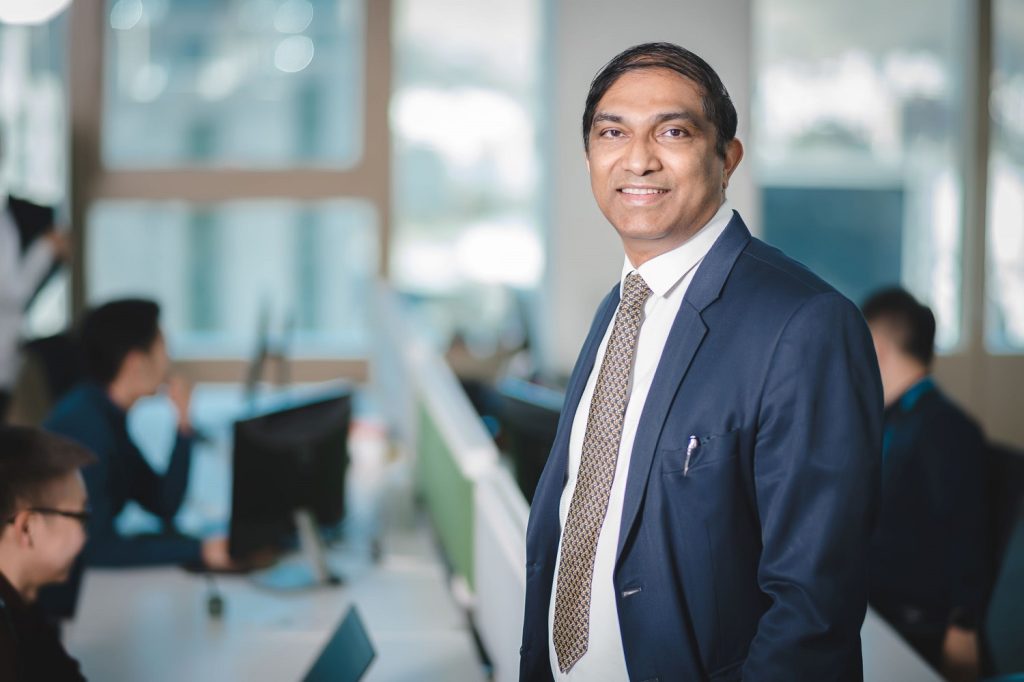
Let us start with the foundations. Khan Bank has just embarked on the modernization of its core banking system, the software heart of the bank. Bankers describe this kind of project as open-heart surgery on a running patient. How did you plan and do it?
Carefully, and with a great deal of humility. A core system carries every account, every loan, every payment. Ours had served the bank well for two decades, but it was designed for a branch-led era, and we were asking it to power a mobile-first bank processing most of the country’s transactions. So, we made the decision to modernize it while the bank kept running at full speed.
“Distance has stopped being a form of financial exclusion in this country.”
We partnered with Tata Consultancy Services and their BaNCS platform, and we treat the migration the way you would treat surgery: rehearse until the team can do it in their sleep. We run full dress rehearsals of the cutover, move the data in controlled stages, and set clear criteria for when we would proceed and when we would stop. We have planned it in various phases and when the phased transition happens our customers should notice almost nothing, which is exactly the outcome we want. The drama of a project like this should all be internal.
What we will have is a modern, componentised core that speaks the language of real-time payments and international standards. More importantly, it will give us clean, well-organised data. And that matters for everything we want to do next, because artificial intelligence is only ever as good as the data underneath it.
You have raised it, so let us go there. Every bank in the world now claims to be an AI bank. What does AI actually do inside Khan Bank today, as opposed to in the press releases?
I am glad you draw that distinction, because the gap between AI announcements and AI in production is wide across our industry. Let me tell you where the technology genuinely works for us today.
The first is fraud and security. Machine learning models watch transaction patterns around the clock and flag behaviour that does not fit a customer’s history, in the moment, before money leaves the account. As payments have become instant, fraud detection has had to become instant too, and no team of humans can review that volume at that speed. This is the least visible use of AI and the most important one.
The second is credit. We use data-driven models to assess lending, and this matters enormously in Mongolia because so many of our customers earn their living outside formal salaried employment. Herders, market traders, small family businesses. A traditional credit process built around payslips excludes them. A model that can read cash-flow patterns, transaction history and seasonality can serve them responsibly. AI, used properly, widens access to credit rather than narrowing it.
The third is service. Customers interact with us digitally millions of times a month, and intelligent tools help us answer routine questions quickly so that our people can spend their time on the conversations that genuinely need a human. I want to be clear that we see these tools as assistants to our staff, not replacements for them. When a family is making the biggest financial decision of their lives, they should be talking to a person.
The credit example is interesting. Walk us through what AI-assisted lending looks like for, say, a herder household in a western aimag.
Take a family with two thousand head of livestock and no payslip in their lives. Twenty years ago, lending to that family meant a loan officer travelling out, forming a judgement, and carrying most of the risk assessment in his or her head. That judgement was often very good, by the way. Our loan officers know their communities in a way no algorithm ever will.
What the models add is memory and pattern. They can see how cash flows through that household across seasons, how cashmere income arrives in spring, how expenses cluster before winter, how similar households across the country have performed through good years and dzud (a severe Mongolian winter that causes widespread livestock losses and threatens herders’ livelihoods) years. The model turns that into a risk picture in minutes rather than weeks, and the loan officer applies local knowledge on top of it. The result is faster decisions, fairer pricing, and credit reaching families the old process would simply have turned away for lack of paperwork.
I would put it this way: in most countries AI in banking is a convenience. In Mongolia it is an inclusion tool.
Mongolia’s geography is brutal for a bank: a handful of people spread across a territory the size of Western Europe. How does technology change that equation?
It inverts it. For most of banking history, geography dictated economics. A branch needs a certain population around it to justify itself, so remote communities got thin service or none. We have never accepted that logic; Khan Bank keeps branches in places no purely commercial calculation would justify, because we believe every Mongolian deserves access to financial services. But branches alone could never close the distance.
The phone closed it. Today the overwhelming majority of our transactions happen digitally, and a customer in the most remote soum has the same bank in their pocket as a customer on Sukhbaatar Square: the same payments, the same savings products, the same loan application. Distance has stopped being a form of financial exclusion in this country, and I think Mongolia deserves more international recognition for that than it receives. There are G7 economies that have not achieved what Mongolia has achieved in payments.
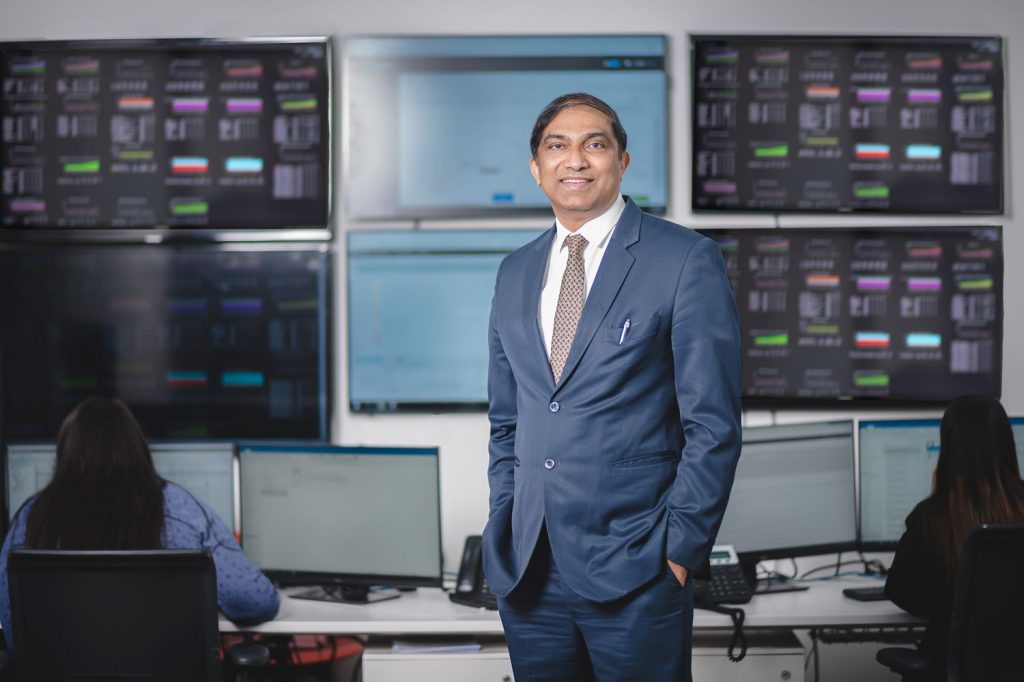
Let us talk about the risks, because AI in banking has them. Model bias, opaque decisions, data privacy. How do you keep the machines honest?
By refusing to treat the model as an oracle. Every model we use is tested before it goes anywhere near a customer, monitored continuously afterwards, and reviewed by people with the authority to switch it off. We check whether outcomes drift, whether particular groups of customers are being treated differently without justification, and whether the model still reflects reality when conditions change. A model trained in good economic times can behave badly in a downturn, so the monitoring never stops.
On transparency, my rule is simple: if we cannot explain a lending decision to the customer in plain language, we should not be making it that way. A customer who is declined deserves to know why and what would change the answer. And on data, we hold information that touches nearly every family in Mongolia. That is not an asset to be sweated. It is a trust to be protected, and we invest in its protection accordingly. Trust is the only real product a bank sells. Everything else is packaging.
Cybersecurity follows naturally from that. Banks everywhere are under constant attack. How exposed is Mongolia, and how does AI change the fight?
No honest banker anywhere will tell you they are safe, only that they are prepared, and preparation is where we put our money. Mongolia faces the same threats as every connected economy: fraud rings, phishing, attempts on infrastructure. The attackers now use AI themselves, to write convincing scams and to probe systems at machine speed, so defending with human speed alone is no longer an option. Our defence uses the same class of tools, watching our networks and transactions continuously and reacting in seconds.
But I will tell you where the real vulnerability sits: it is rarely the technology, it is the moment a person is persuaded to hand over a code or click a link. So alongside the systems we invest heavily in educating our customers, in Mongolian, in plain language, again and again. A vigilant customer is worth as much as any firewall.
Every conversation about AI eventually arrives at jobs. Khan Bank is one of Mongolia’s largest employers. Should your staff be worried?
They should be preparing, which is different from worrying. I will not insult anyone’s intelligence by pretending banking jobs will look the same in ten years. Work that is pure repetition, keying data, reconciling records, answering the same question for the thousandth time, will increasingly be done by machines. But I have watched this industry through several waves of automation, and each one moved people up the value chain rather than out of it. The ATM did not eliminate the teller; it changed what the teller does.
Our responsibility is to carry our people through that change, and we take it seriously. We are retraining staff continuously, and some of our best digital specialists today started their careers counting cash in a branch. What I find genuinely exciting is the national picture: Mongolia produces talented young engineers, and for the first time they can build careers in advanced technology at home, at scale, in Mongolian institutions, rather than feeling their future lies only abroad. Khan Bank intends to be the place they choose.
How do you find working with Mongolian regulators on all of this? Central banks globally are struggling to keep pace with AI.
I have found the authorities here engaged and pragmatic, and I do not say that to flatter anyone. The Bank of Mongolia and the Financial Regulatory Commission understand that the answer to new technology is neither to wave it through nor to block it, but to understand it. We spend real time with them explaining what we are building and why, and they ask hard questions, which is exactly what a regulator should do.
My view is that regulation and innovation are on the same side when both are done well. A customer will only embrace digital banking if they believe the system is safe, and the regulator is a guarantor of that belief. The countries getting AI in finance right are the ones where banks and supervisors learn together, and Mongolia has the advantage of a small, tight-knit financial community where that conversation can actually happen around one table.
Khan Bank listed on the Mongolian Stock Exchange in 2023 in one of the largest IPOs the country has seen, with tens of thousands of ordinary Mongolians becoming shareholders. Does public ownership change how you invest in technology?
It sharpens it. Technology programmes of the size we run are measured in years and in serious money, and when your shareholders include tens of thousands of your own customers, you feel a particular duty to spend well. I sit in front of our board and, in effect, in front of the Mongolian public, and every major investment has to answer a plain question: how does this make banking better, safer or cheaper for the people of this country?
The IPO also said something to the market. A bank does not replace its core systems and invest at this level if it is thinking about the next quarter. We are building for the next twenty years, and our shareholders own a piece of that.
We have just witnessed another milestone, with Khan Bank becoming Mongolia’s largest listed company by market capitalization, reaching MNT 3.4 trillion as of September 2026.
Where does Khan Bank’s technology go from here? Paint us the picture five years out.
Banking that comes to you before you ask. Today, a customer still has to know what they need: a loan, a deposit, an insurance product. The next stage is a bank intelligent enough to notice that your business’s cash cycle is tightening before you do, or that this winter’s conditions suggest a herder household should restructure early, and to offer the answer at the right moment, respectfully, with the customer always in control.
“Trust is the only real product a bank sells. Everything else is packaging.”
If we get that right, what I hope people say about Khan Bank in five years is not that it has impressive technology. Customers do not care about technology, and nor should they. I hope they say that banking simply became easy, and that they cannot quite remember when that happened.
You have worked in Mumbai, New York’s orbit, Tokyo, Hong Kong. What would you tell a global banking audience about building technology in Mongolia?
That constraint is a wonderful teacher. In the big financial centres, problems are often solved with headcount and budget. Here we have neither in abundance, so we are forced to be genuinely inventive, and the solutions that emerge are leaner and often better. When you design a mobile bank that works on a modest phone, on a patchy connection, for a customer five hundred kilometres from the nearest branch, you have designed something that will work anywhere on earth.
“If we cannot explain a lending decision to the customer in plain language, we should not be making it that way.”
I would also tell them to watch this country. Mongolians adopt technology with an openness I have rarely seen, the state has pushed digital public services hard, and the population is young enough to carry this for decades. Small markets like this one are where the future of banking gets prototyped. The big markets just get the results later, at greater expense.
A final, personal question. When you look back on the move you made in 2019, leaving the established path for Ulaanbaatar, what has it given you?
A sense of consequence, which is rarer in a career than people admit. I have stood in a branch in the countryside and watched a customer receive a loan through a process my team built, and known that a version of that moment was happening thousands of times across the country that day. Mongolia gave me the chance to see, directly, what technology in banking is actually for. It is not for the bank. It is for the woman running a shop in Darkhan who gets her working capital in an afternoon instead of a month. Once you have worked at that distance from the customer, this close, you would not trade it for any head office in the world.
Leave a Reply